
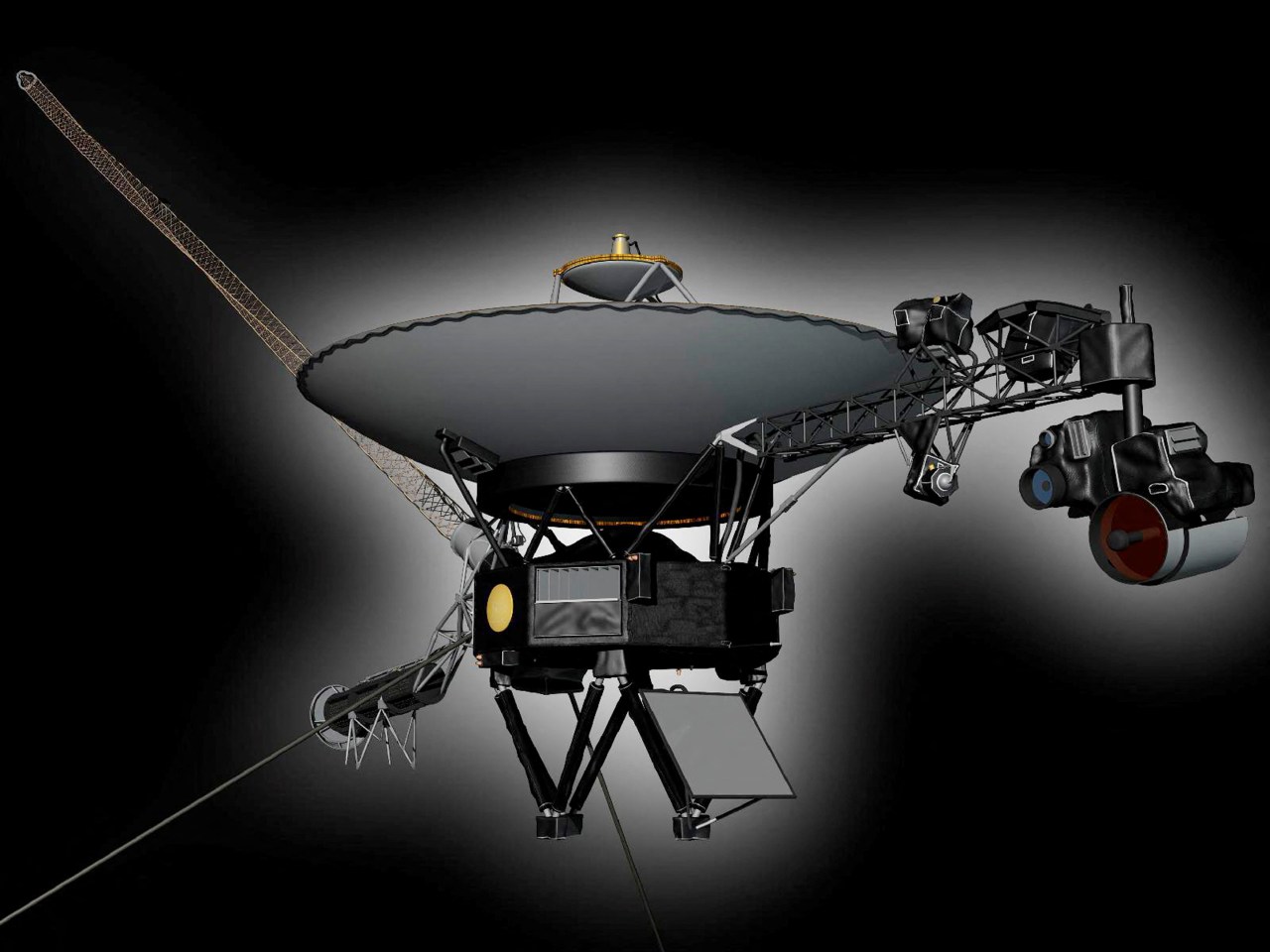
A message sent to Voyager 1 now takes about 24 hours to arrive, and its reply takes another 24. NASA calculated that the spacecraft, launched in 1977, reached one light-day from Earth at 5:16 a.m. Eastern on Nov. 18, 2026, making it the first human-made object at that distance, roughly 16 billion miles away.
As of Wednesday, NASA was awaiting a signal on Thursday, Nov. 19, to confirm the calculated crossing. The spacecraft is still sending science measurements from interstellar space.
“Reaching one light-day is an astounding feat, one that I never expected to see,” said Suzanne Dodd, the Voyager project manager.
NASA invited people to flash the spacecraft’s call sign, VGR, in Morse code after sunset Tuesday, Nov. 17, using phones, flashlights or buildings. Voyager 1 can’t see the displays.
Voyager 1’s planned 5-year mission took it past Jupiter and Saturn. It took the Pale Blue Dot photograph in 1990 before its cameras were shut down to save power, then passed beyond the heliosphere, the region shaped by solar particles and magnetic fields, into interstellar space in 2012.
As of April 2026, NASA listed 2 operating science instruments on Voyager 1: a magnetometer and a plasma-wave instrument, which measure magnetic fields and plasma vibrations in thin interstellar gas. Solar storms still affect the spacecraft, and the magnetic field beyond the heliosphere hasn’t turned to the direction scientists expected.
Both Voyagers lose about 4 watts of power a year. A September 2026 switch to lower-power heating equipment postponed a possible next instrument shutdown from as early as summer 2027. A JPL representative estimated that power-saving steps might keep both spacecraft in contact another 3 to 4 years and their current instruments running through their 50th launch anniversaries in 2027.
NASA antennas couldn’t detect Voyager 1’s signal on Oct. 18 or 19, but it returned Oct. 20 before engineers sent a troubleshooting command. Backup thrusters had activated automatically. JPL said on Oct. 29 that the cause remained unknown.
Voyager 2 traveled past Uranus and Neptune and is expected to reach a light-day from Earth in November 2035.